

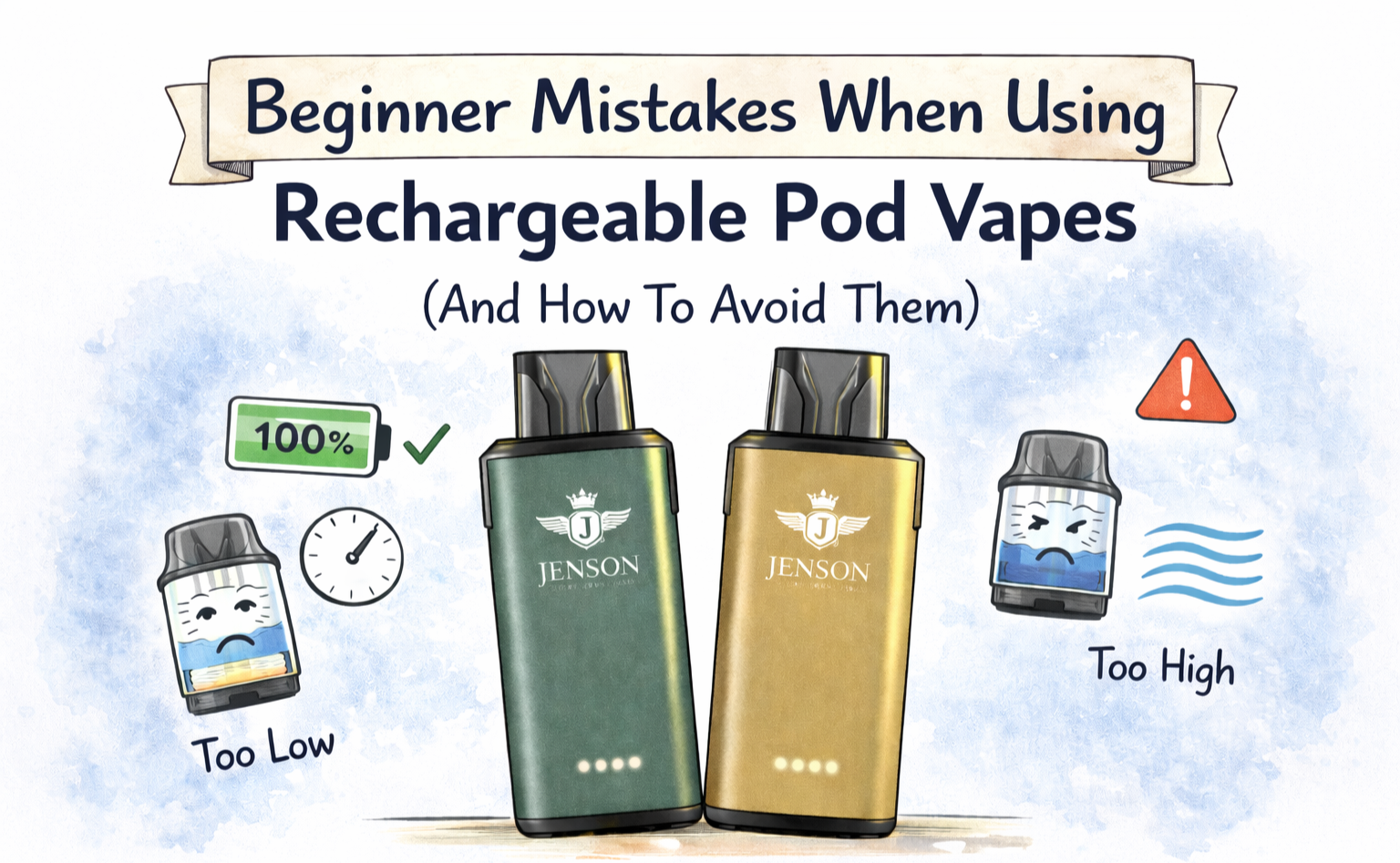
Rechargeable pod vapes are designed to be simple, low-maintenance, and beginner-friendly. That’s exactly why they’re so popular with smokers switching to vaping and with users who want a compact, reliable setup. But “simple” doesn’t mean mistake-proof. A few small habits can make the difference between smooth flavour and constant frustration.
Most early complaints like burnt taste, weak flavour, poor nicotine satisfaction, short pod lifespan, are not device faults. They usually come from usage mistakes that are easy to fix once you understand what’s happening inside the pod.
Let’s walk through the most common beginner mistakes, why they cause problems, and what good practice actually changes in real-world performance.
Mistake #1 - Not Priming a New Pod
One of the fastest ways to ruin a pod is vaping it too soon.
Inside every pod is a cotton wick that must absorb e-liquid before first use. When you vape too soon, you’re heating dry cotton. Cotton burns at a much lower temperature than liquid vaporizes and once it scorches, the taste is permanently damaged.
This is why a brand-new pod can taste burnt within the first few puffs if rushed. It’s not a defective pod, it’s a dry wick burn.
Correct Practice:
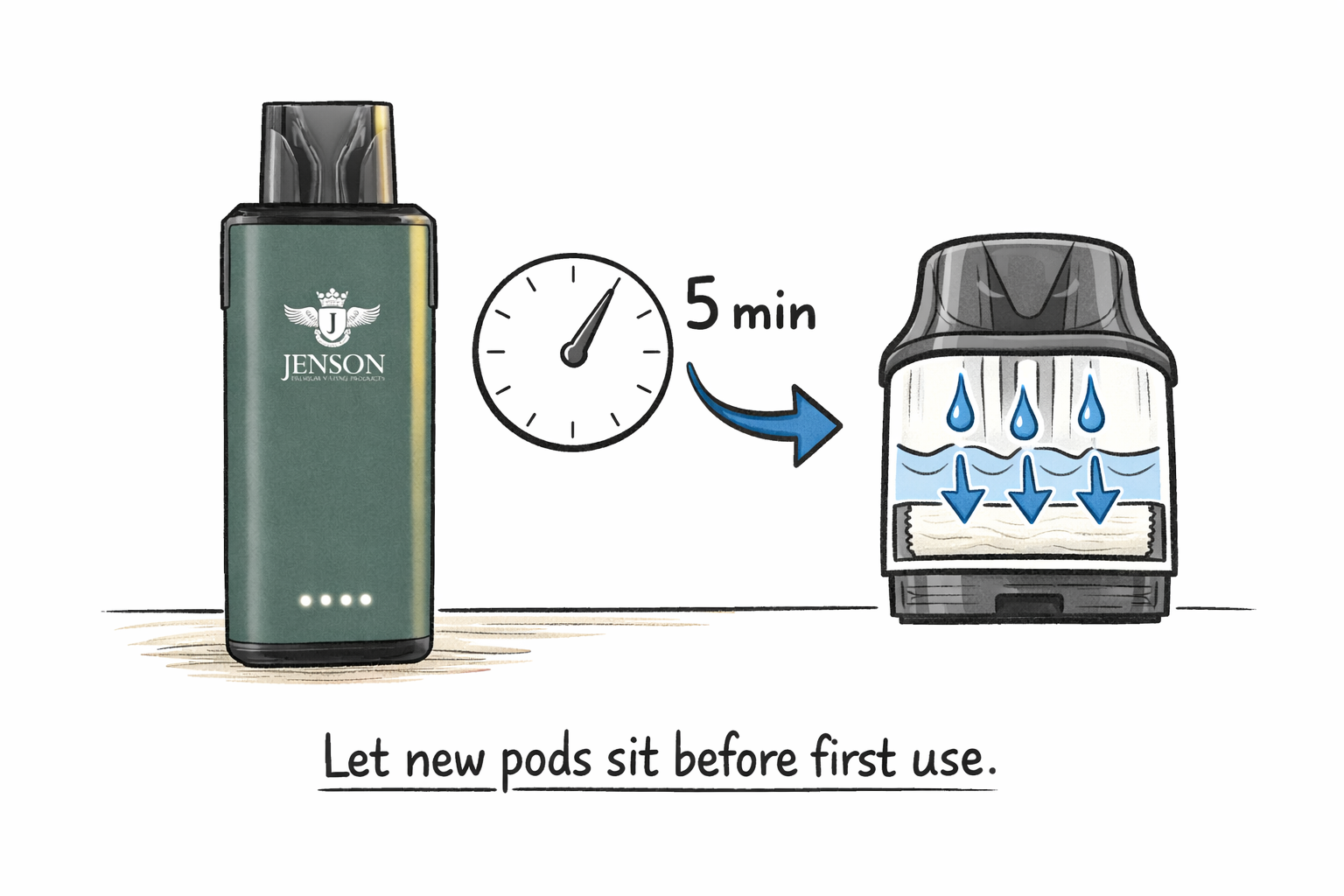
When the wick is properly primed, liquid acts as both flavour source and cooling layer. It keeps coil temperature stable and prevents scorching. That’s why correct priming dramatically improves first-day flavour and extends pod life.
Good priming practice means filling the pod, letting it sit upright for at least five minutes, and giving the wick time to fully absorb liquid. A couple of gentle pulls without activating the device (if your model allows it) helps draw liquid into the coil chamber. After that, normal vaping is safe.
This single habit prevents the most common “my pod tastes burnt” complaint.
Mistake #2 - Chain Vaping Too Quickly
Pod systems are not built for rapid, back-to-back puffs like high-power devices. They rely on small wicks that need time to re-saturate. Chain vaping can dry the wick faster than it refills.
Each puff vaporizes a small amount of liquid from the wick. After the puff ends, more liquid needs time to flow back into the cotton. That refill process is not instant. If you take repeated puffs too quickly, the coil heats again before the wick has re-saturated.
The result is gradually drying cotton, rising coil temperature, and flavour breakdown. You may first notice flavour fading, then a warmer hit, then a dry edge creeping in. Continue pushing it and you shorten pod lifespan significantly.
Better Habit:
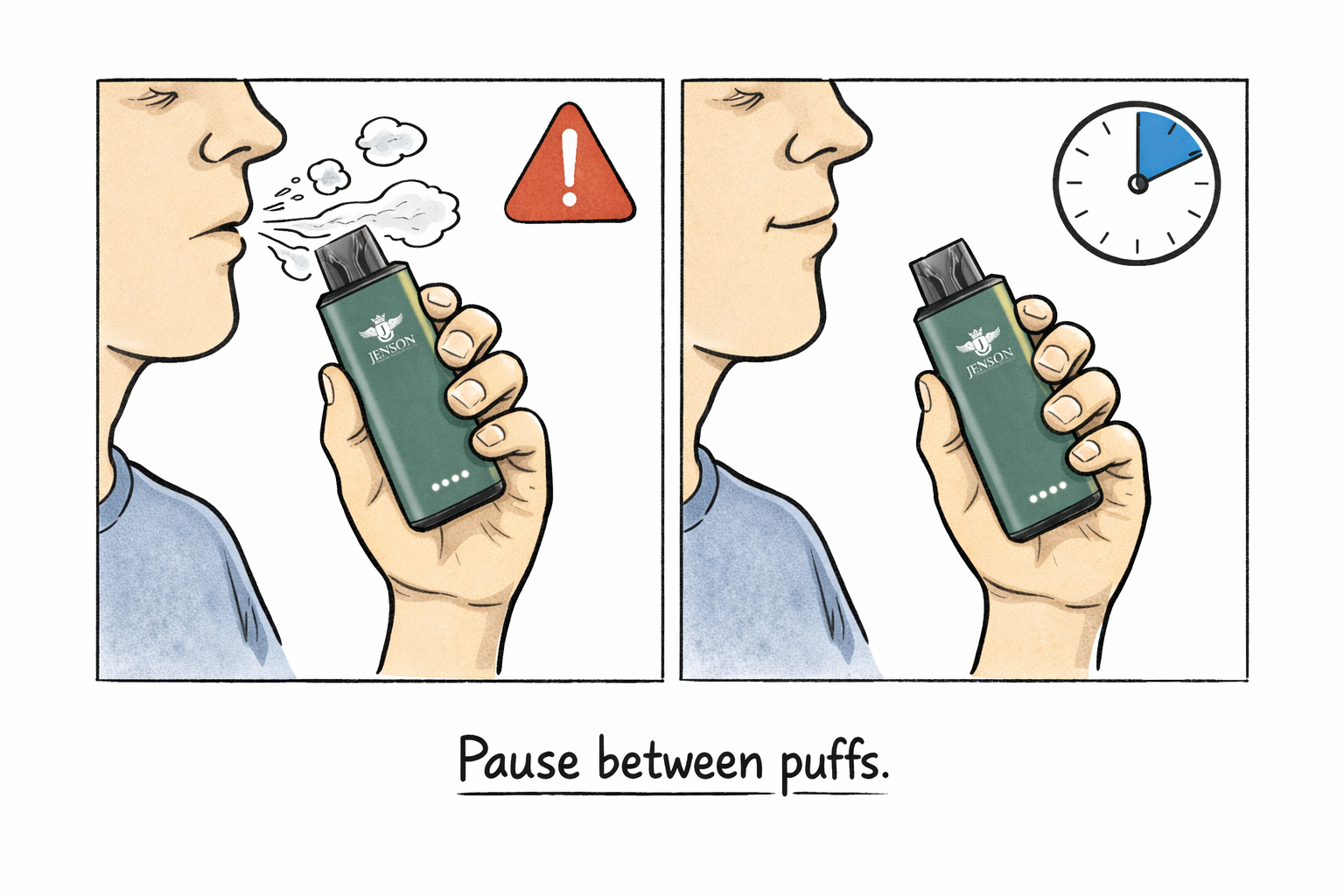
Spacing your puffs by even 15-30 seconds allows the wick to rebalance. That short pause keeps flavour consistent and protects the coil from heat stress. You’ll actually get more total puffs per pod by vaping slightly slower.
Better pacing doesn’t reduce satisfaction, it improves consistency.
Mistake #3 - Ignoring Airflow Settings
Adjustable airflow is often overlooked by beginners, but it directly controls how your vape feels and performs.
Airflow changes how much air passes over the coil during each puff. That affects vapour temperature, flavour concentration, throat feel, and nicotine delivery sensation.
When airflow is too tight, vapour becomes hotter and more concentrated. This can feel harsh and overly strong, especially with higher nicotine strengths. New users often mistake this for “bad liquid” or “bad coil,” when it’s simply too restricted airflow.
When airflow is too loose, vapour becomes cooler and more diluted. That can make flavour feel weak and nicotine feel less satisfying, leading to over-puffing to compensate.
Correct Practice:
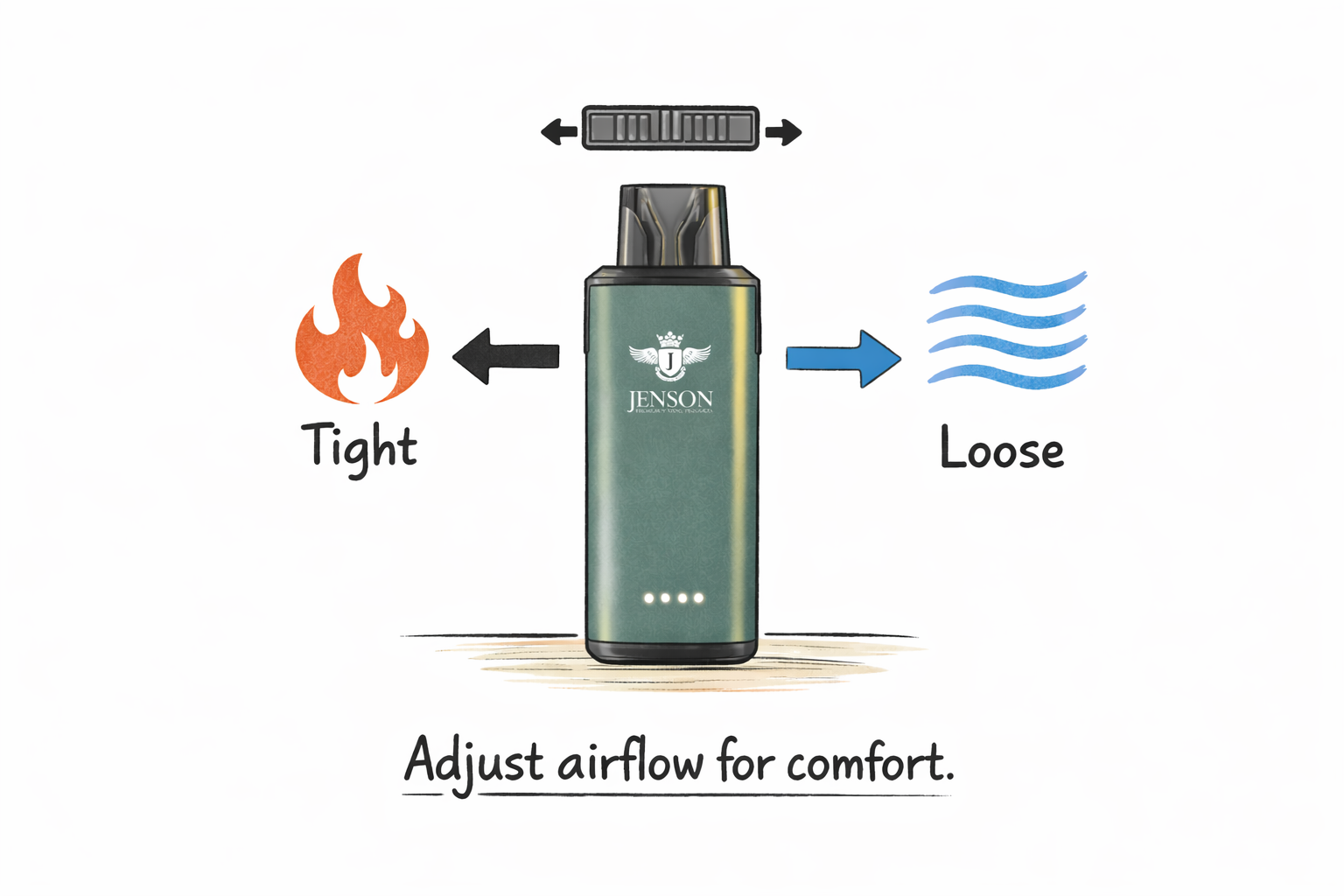
Gradual adjustment is key. Small changes make noticeable differences. Finding your airflow sweet spot improves comfort, flavour clarity, and satisfaction without changing anything else in your setup.
Mistake #4 - Choosing the Wrong Nicotine Strength
Nicotine strength is one of the biggest satisfaction drivers, and one of the most misunderstood.
If nicotine strength is too low, users tend to puff more often and more aggressively trying to reach satisfaction. That increases heat stress on the coil, drains battery faster, and can make flavour seem weaker simply because the device is being overworked.
If nicotine strength is too high, the opposite happens. The throat hit becomes sharp, coughing increases, and dizziness or discomfort can occur. Many beginners wrongly assume the device is the issue when the real cause is nicotine mismatch.
General beginner guidance:
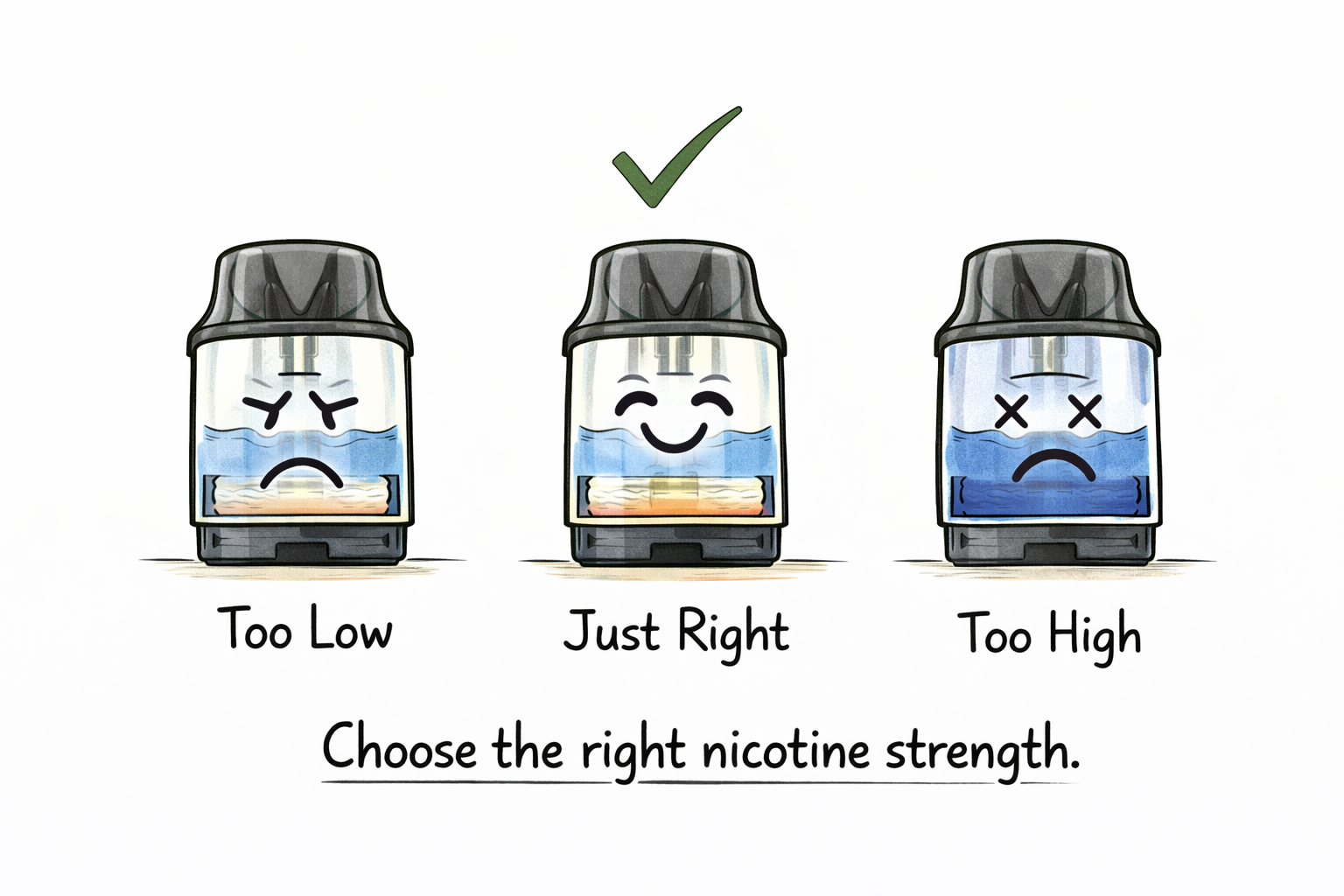
Pod systems are typically optimized for nicotine salt e-liquids because they deliver nicotine smoothly at higher strengths. Matching strength to your prior smoking level reduces over-puffing, improves comfort, and stabilizes usage patterns.
Correct nicotine level doesn’t just affect cravings, it affects how gently or aggressively you use the device, which directly impacts pod longevity.
Mistake #5 - Overcharging the Battery
Most modern pod devices include charging protection, but battery health still depends on user habits.
Lithium batteries experience the most stress when held at 100% charge for long periods or repeatedly topped up unnecessarily. While protection circuits prevent dangerous overcharging, they cannot fully prevent long-term capacity wear from poor charging patterns.
Over time, stressed batteries show reduced runtime, weaker power delivery near mid-charge, and less consistent coil heating. That inconsistency can slightly affect vapour production and flavour delivery.
Better charging practice:
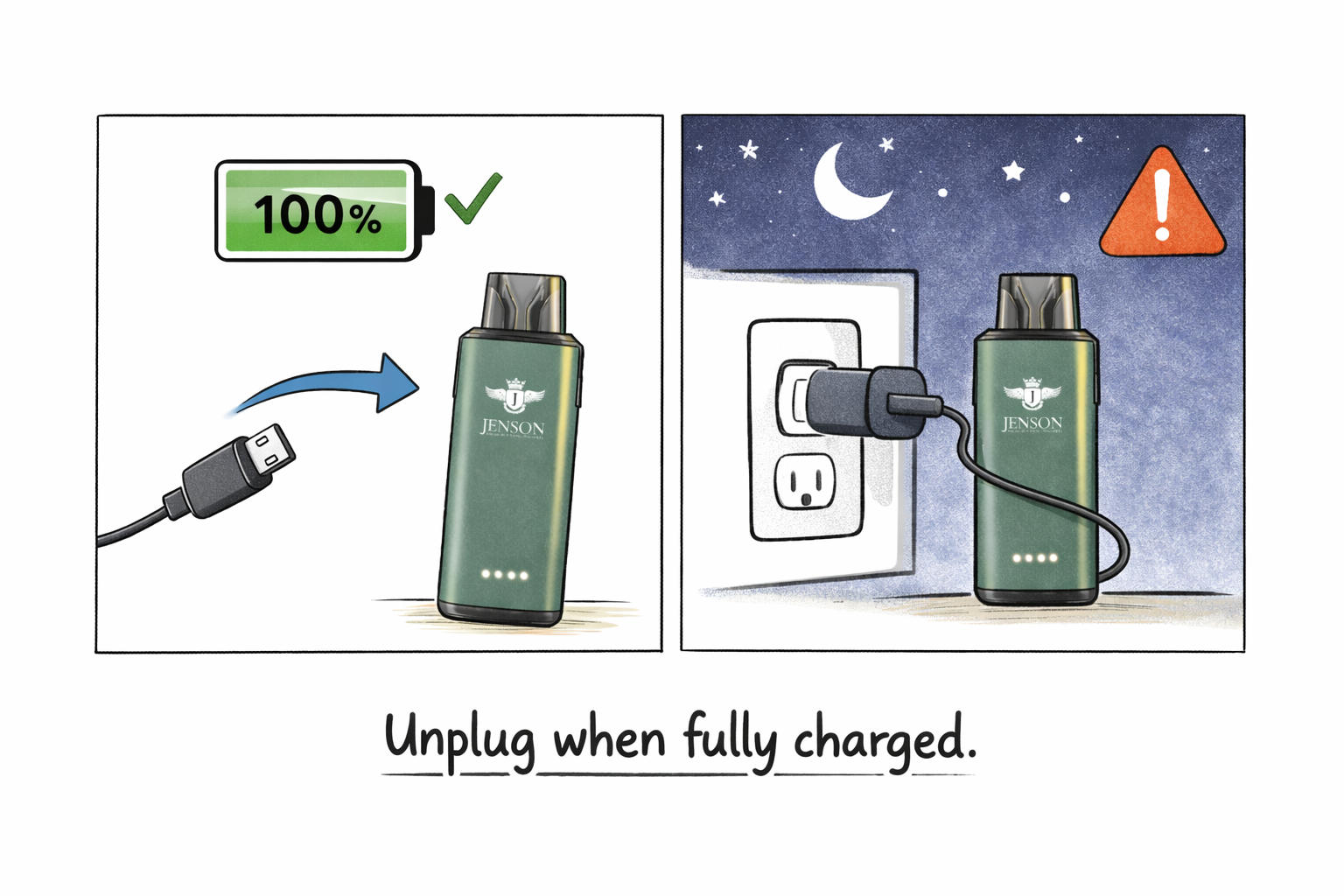
Healthier charging practice means charging when meaningfully low rather than constantly topping up, unplugging once full, and using the correct cable type. Avoiding overnight charging when possible also reduces long high-voltage dwell time.
Good battery habits preserve performance stability, not just lifespan.
Mistake #6 - Letting Pods Run Too Low
Running a pod nearly empty exposes the wick to partial dryness even if some liquid remains at the bottom.
Wicks draw liquid through small intake ports. When the liquid level drops below those ports, the wick can’t stay fully saturated. The coil then heats unevenly — part wet, part dry — which creates that familiar “slightly burnt edge” taste.
Many users try to stretch the last few drops, but this is exactly where coil damage happens. A few borderline dry pulls can permanently reduce flavour quality for the rest of the pod’s life.
Better Practice:
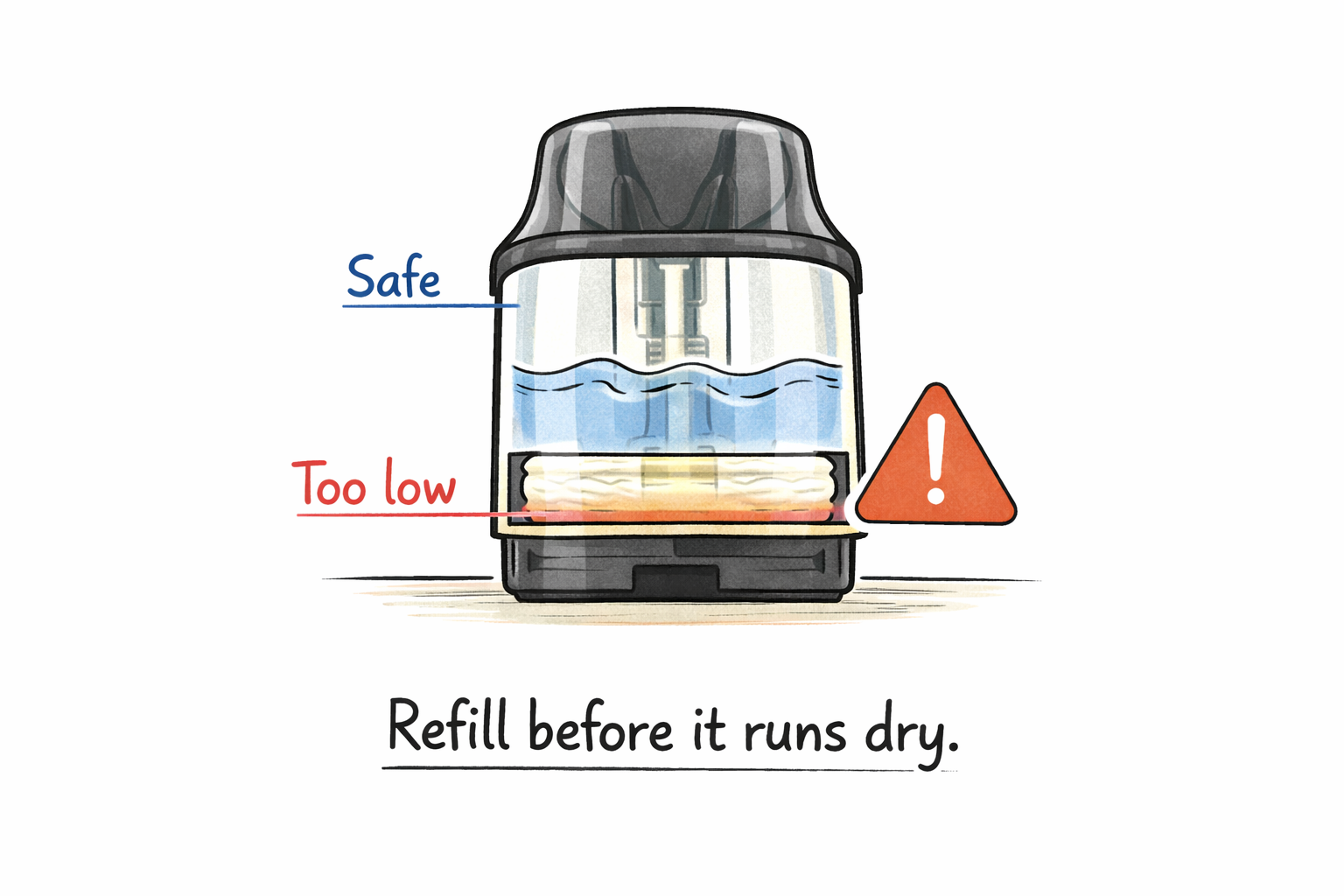
Keeping liquid above the wick ports ensures consistent saturation and stable coil temperature. Refilling slightly earlier protects flavour and extends usable pod life.
Conclusion: Small Habits, Big Difference
Rechargeable pod vapes are built to be convenient, but good results still come from good habits. Most of the problems beginners run into: burnt pods, weak flavour, harsh hits, poor nicotine satisfaction, or short battery life are not product faults. They’re usage patterns that can be corrected easily once you understand what’s happening inside the device.
Priming pods properly protects the wick. Slowing down between puffs keeps flavour stable. Adjusting airflow improves comfort and satisfaction. Choosing the right nicotine strength reduces overuse and irritation. Sensible charging preserves battery performance. Refilling before the pod runs too low protects the coil.
None of these steps are complicated, but together they dramatically improve your experience.
If you treat your pod system with a bit of patience and awareness, you’ll get better flavour, longer pod life, more consistent performance, and a far smoother switch overall. That’s the difference between “vaping didn’t work for me” and “this works perfectly.”