

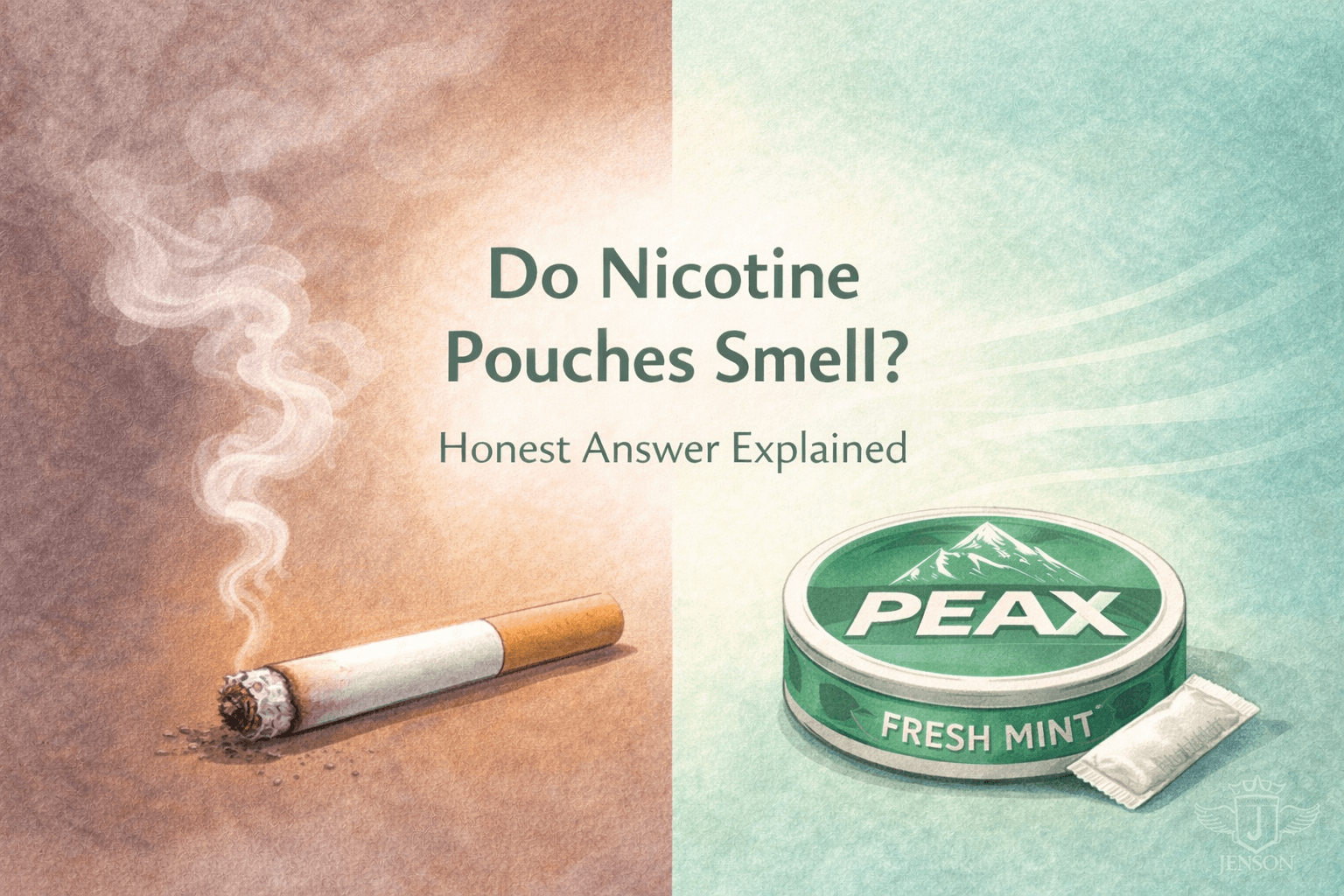
One of the most common questions from people exploring nicotine pouches for the first time is simple: do nicotine pouches smell?
It’s a fair question, especially for adult users who are used to smoking, where smell is a major factor on clothes, hands, and indoor spaces. The short answer is that nicotine pouches are designed to be low-odour in normal use, but the full picture is worth understanding.
This guide explains what you can realistically expect, when scent might be noticeable, and how nicotine pouches compare to smoking when it comes to smell.
The Short Answer
Nicotine pouches do not produce smoke or vapour, so they don’t create the strong, lingering odour commonly associated with smoking. Because there is no combustion involved, there’s no smoke residue in the air and no burnt smell left behind.
Most adult users find that any scent from a nicotine pouch, if present, is mild and stays very close to the user rather than spreading into the room.
Where Any Smell Comes From
Nicotine pouches may have a light scent depending on the flavour used. This comes from the flavouring inside the pouch, not from burning or heating.
In practice, this means:
- The scent is usually subtle
- It’s noticeable mainly at close range
- It doesn’t behave like smoke
Mint flavours may give off a faint fresh scent, while fruity or drink-inspired flavours can have a slightly sweeter aroma when the can is opened. However, this is typically far less noticeable than cigarette smoke.
Do Nicotine Pouches Make Your Breath Smell?
In most cases, nicotine pouches don’t create a strong odour on the breath. Flavoured pouches may leave a mild flavour note, similar to mint or flavoured gum, but not a burnt or smoky smell.
This is one reason many adult users describe nicotine pouches as more discreet in social situations compared to smoking.
How This Compares to Smoking
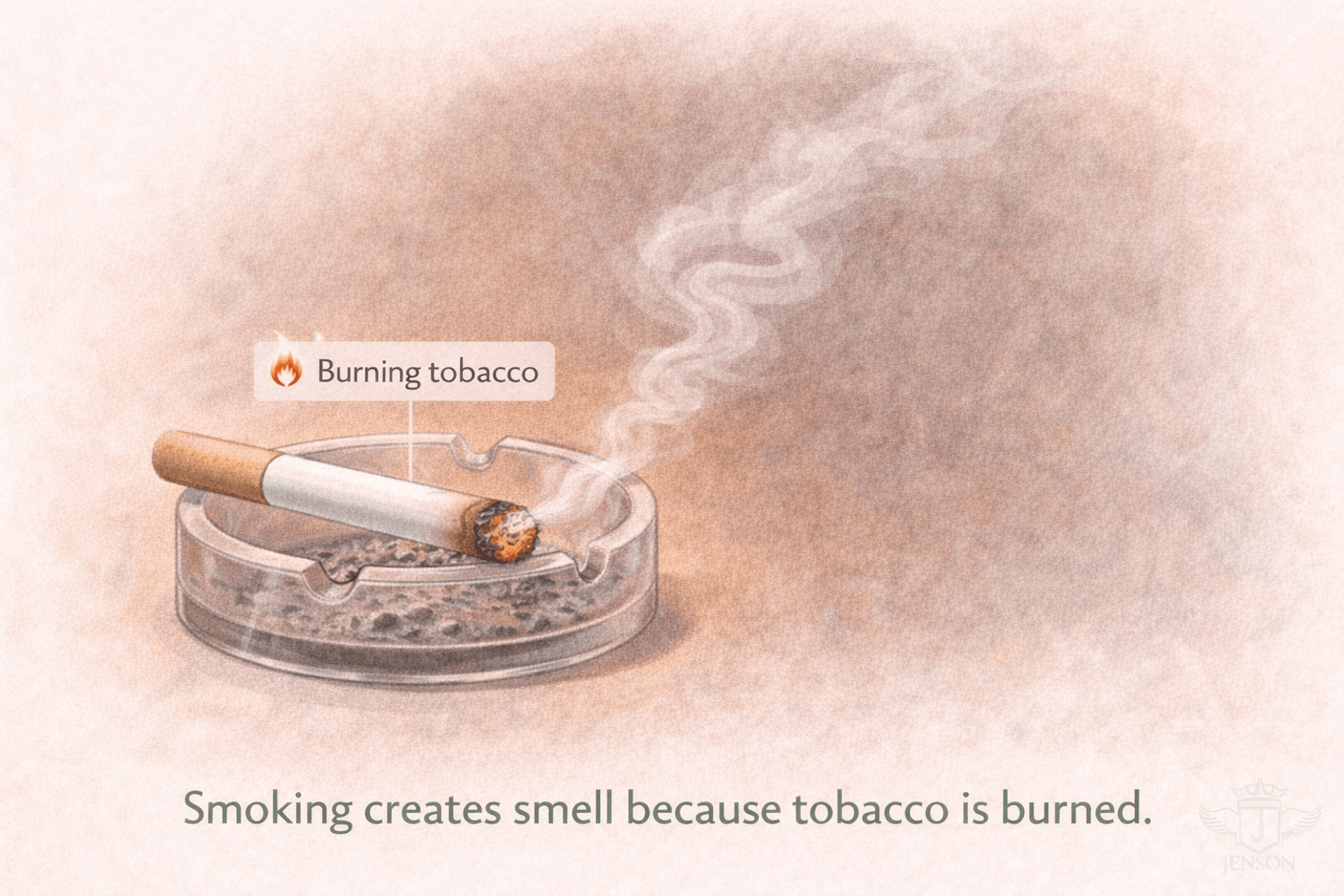
Smoking involves burning tobacco, which produces smoke, ash, and airborne particles that carry odour. That smell tends to:
- Travel through the air
- Settle into fabrics
- Linger on hands and clothing
Nicotine pouches work differently because they are used orally and do not involve combustion. As a result, there is no smoke released into the surrounding environment.
If you want a full breakdown of how the two experiences differ, see our guide on nicotine pouches vs smoking.
When Scent Might Be Noticeable
While nicotine pouches are generally low-odour, there are a few situations where scent can be noticed:
- When opening the can close to your face
- When using strongly flavoured varieties
- If someone is standing very close to you
Even then, the scent is typically light and short-range rather than room-filling.
Tips for Keeping Things Discreet
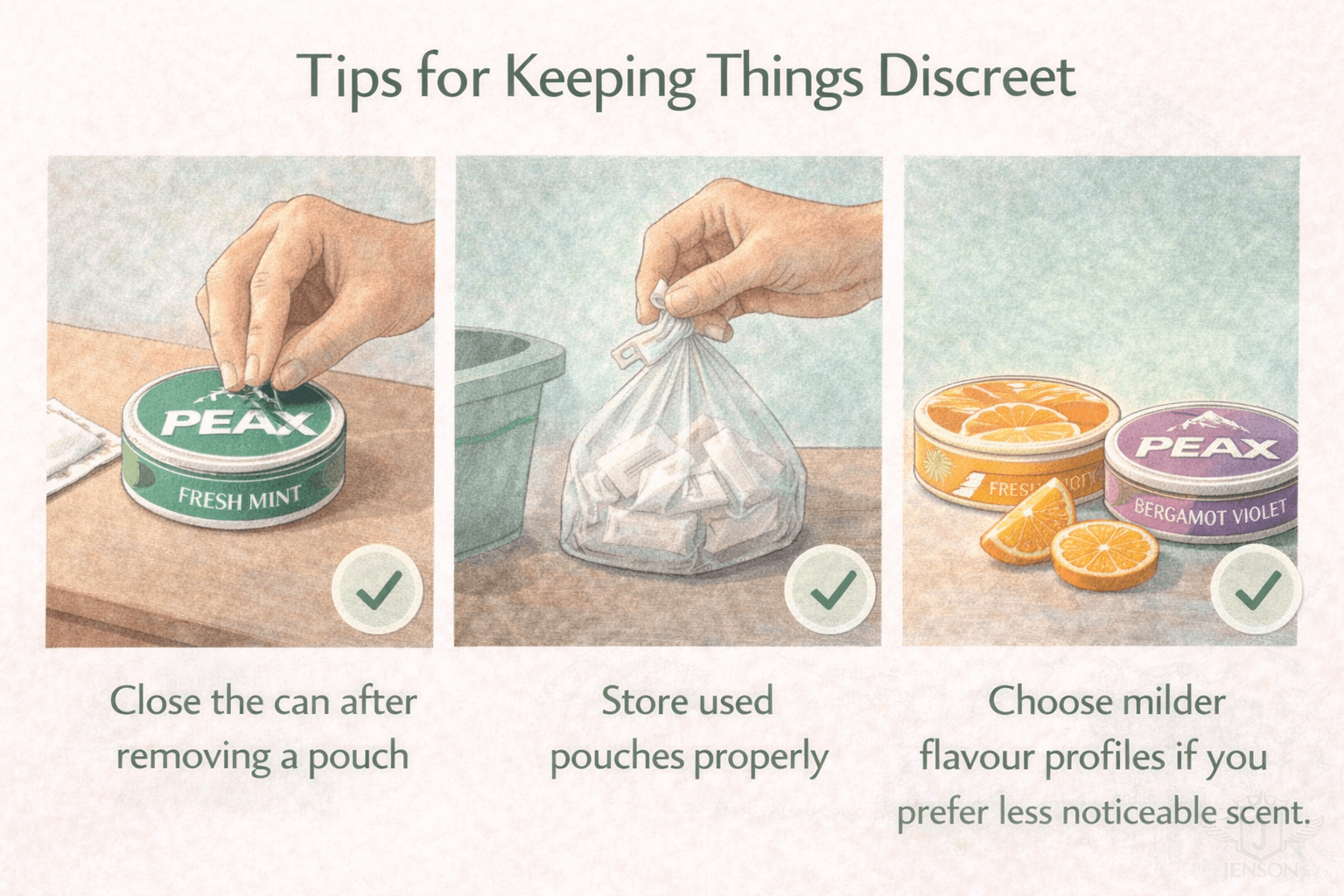
If discretion is important to you, a few simple habits help:
- Close the can after removing a pouch
- Store used pouches properly
- Choose milder flavour profiles if you prefer less noticeable scent
If you’re still new to pouches, our How to Use Nicotine Pouches guide explains proper use and disposal step by step.
Choosing Flavours With Discretion in Mind
Flavour choice can influence how noticeable any scent is at close range. Mint and more neutral profiles are often perceived as lighter, while sweeter or more flavour-forward options may be slightly more noticeable when the can is opened.
If you’re exploring flavour options, our guide on how to choose the right nicotine pouch flavour can help you compare categories and decide what fits your routine.
You can also browse the full range on our Nicotine Pouches page to compare flavour types directly.
Final Thoughts
Nicotine pouches are generally low in odour during normal use because they don’t produce smoke or vapour. Any scent that is present usually comes from flavouring and tends to be mild and close-range.
For adult users who are concerned about lingering smells, understanding how nicotine pouches work and how they differ from smoking helps set clear, realistic expectations.
If you’re unsure which flavour or format might suit you best, the team at Jenson is always happy to help you explore your options.